The Global Center for Maritime Decarbonization (GCMD) has completed trials on two supply chains of biofuel blends for vessel bunkering, the center said on Tuesday.
The maritime industry has been trying to source for green fuels to reduce carbon emissions ahead of the International Maritime Organization's 2030 and 2050 decarbonization targets. Biofuel bunkering is gaining traction in Singapore, with more than 90 biofuel bunkering operations completed last year, according to Singapore's Maritime and Port Authority.
The trials were part of a $18 million global biofuels bunkering project launched by the GCMD in July last year, which is expected to span 12 to 18 months.
The two trials took place from Oct. 31 to Feb. 15, with about 4,700 tonnes of sustainable biofuel blends bunkered, the center said.
The biofuel blends used in the trials comprised used cooking oil methyl ester (UCOME) blended with very low sulphur fuel oil (VLSFO) and high sulphur fuel oil (HSFO) respectively.
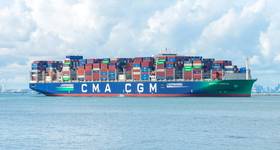
In the first chain, energy major Chevron supplied blend consisting of 24% biofuel (B24) and the remainder VLSFO to the vessels CMA CGM Maupassant and MOL Endowment, operated by shipping majors CMA CGM and ONE, respectively.
Chevron also bunkered its own vessel Singapore Voyager with a blend of 20% biofuel (B20) and HSFO, as well as to the vessel Elizabeth I.A. owned by Angelicoussis Group.
Separately, energy major TotalEnergies Marine Fuels supplied a B24-VLSFO blend to the vessel Lycaste Peace owned by NYK.
The biofuels were traced from their production origin to where the fuels were blended and bunkered in Singapore.
"The lack of assurance on the quality, quantity and emissions abatement of biofuels is a pain point we identified from interviewing more than 100 industry stakeholders", said Sanjay Kuttan, chief technology officer at GCMD.
He added that developing a framework to provide transparency of the biofuel supply chain will increase user confidence and decrease the barrier for wider adoption.
Three more supply chains trials will come next, using different sources of biofuel, the GCMD said.
The third trial will adopt fatty acid methyl ester (FAME) blended with VLSFO, while the fourth will trial hydrotreated vegetable oil (HVO) with marine gasoil at Rotterdam.
Crude algae oil (CAO) will be evaluated as a drop-in fuel for the fifth supply chain trial.
(Reuters - Reporting by Jeslyn Lerh; Editing by Christian Schmollinger)