There is still a lot of space in the logistics sector to use digitization to achieve more transparency and, particularly, more efficiency.
ABN AMRO, the Port of Rotterdam Authority and Samsung SDS, the logistics and IT arm of Samsung, have joined forces to launch a pilot based on blockchain technology. The pilot starts in January next year, and the results will be announced in February 2019. The ultimate goal is for a complete, paperless integration of physical, administrative and financial streams within international distribution chains.
"The transportation, monitoring and financing of freight and services should be just as easy as ordering a book online."
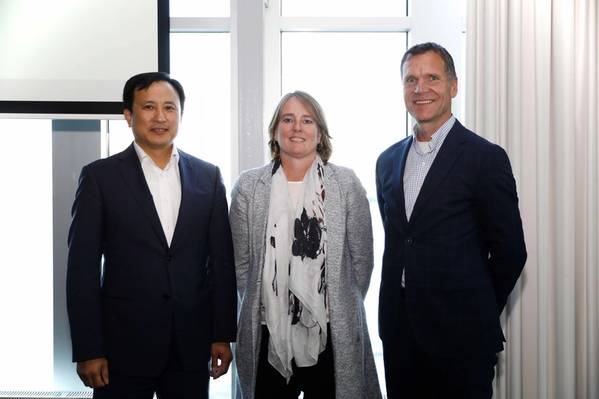
"Currently payments, administration and the physical transportation of containers still take place entirely via separate circuits," explained Paul Smits, the Port of Rotterdam Authority’s Chief Financial Officer. "This results in inefficiency as many parties are involved and everything is organized via paper documentation. For instance, an average 28 parties are involved in container transport from China to Rotterdam. The transportation, monitoring and financing of freight and services should be just as easy as ordering a book online."
The development of the pilot was assigned to BlockLab, which was established by the Port of Rotterdam Authority.
Daphne de Kluis, ABN AMRO CEO Commercial Banking, said, "We will be integrating all these flows in our pilot: from workflow management combined with track & trace to the digitization of paper documentation such as waybills and the financing of handled freight or services. The ultimate goal is to reach an open, independent and global platform that operates from the perspective of shippers. This will make the logistics chain more transparent and efficient, and millions of euros can be saved in the long term."
"We will be using blockchain technology to create this," added Sanghun Lee, President of Samsung SDS EU/CIS. "Blockchain offers all parties in the logistics chain the opportunity to coordinate activities using validated data and without central management. Digitization provides automation, which creates an ultra-efficient logistics chain. What is particularly special about the project is that, for the first time in the rather short history of this technology, we can have different blockchains operating together. This takes place via an overarching ‘notary’ that connects entirely separate blockchains in Korea and the Netherlands."
The pilot involves the multi-modal transport of a container from a factory in Asia to a location in the Netherlands. In the first instance, the pilot will be implemented by the three parties, but the cooperative network will then become open for other parties to join.