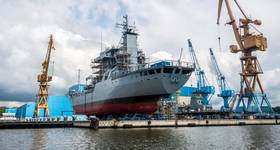
Austal Limited successfully completed Full Shock Trials by USS Jackson(LCS 6) on July 16, 21016.
The Navy stated that USS Jackson (LCS 6) “performed exceptionally well” during her third and final underwater explosion as part of her Full Ship Shock Trials (FSST). This is a significant milestone for the LCS program and Independence variant warship.
Last month, the Navy commenced FSST on JACKSON to validate her operational survivability after exposure to underwater shock.
Austal Chief Executive Officer David Singleton said this test now completes the physical shock trial for the LCS programme and we note the positive reaction of the United States Navy following the trial.
“We’re very pleased with the performance of JACKSON during these Full Ship Shock Trials following the extensive work programme that has been implemented on the ship to meet this standard. Whilst the Navy will continue to assess the results for several months the final test appears to validate the ability of our aluminum trimaran to operate and survive after exposure to underwater shock.”