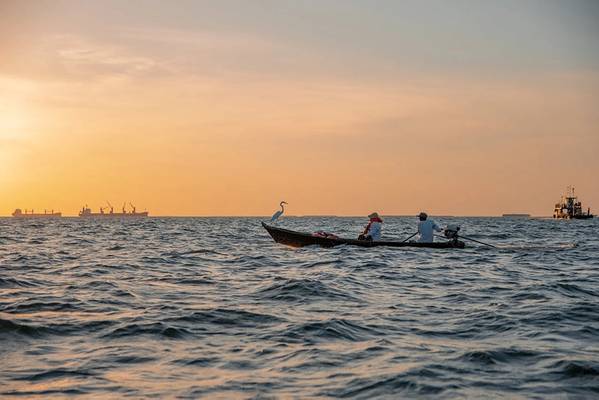
Port terminal lobby groups in Brazil are urging government officials to allow dredging on the Tapajos River, a major waterway for grain exports that cuts through the Amazon rainforest, fearing a severe El Niño could leave one of the country's main export routes too shallow for barges.
Global trading firms, such as Bunge, Cargill, and Louis Dreyfus, move roughly 15 million metric tons of grains annually along the Tapajos, industry data shows. Brazil is the world's largest soybean exporter and one of the leading suppliers of corn.
But the Brazilian government has not granted the authorization intended to clear silt from sections of the river, citing technical analysis and consultation with local communities.
With meteorologists forecasting a strong El Niño, a weather pattern associated with droughts in the Amazon, the port terminal sector in Brazil fears a repeat of the transport disruptions and delays last seen in 2023 and 2024 due to low water levels in the Tapajos.
"What's worse is yet to come. We're seeing water levels fall, which is why the alarm has been raised to carry out dredging," Jesualdo Conceicao Silva, head of the Brazilian port terminals lobby ABTP, told Reuters.
There are currently no interruptions to navigation on the river, but the ongoing decrease of water levels could lead to access restriction to the most critical areas from mid-September, Silva added.
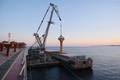
On the Tapajos, grains are loaded onto barges at terminals in Itaituba and transported to the Santarem and Barcarena ports – all of them located in the northern Para state – before reaching the ocean and export markets.
The Ministry of Ports and Airports said it decided not to carry out dredging on the stretch between Itaituba and Santarem at the moment after reviewing data, and discussing the matter with Indigenous people and traditional communities in the region.
INDIGENOUS RESISTANCE
Indigenous people from around the region occupied Cargill facilities in Santarem earlier this year to protest a government decree which they said would open the door to dredging in Amazonian rivers without consultation, potentially impacting water quality and the fishing they rely on to survive.
The government of President Luiz Inacio Lula da Silva revoked the decree after the occupation.
In a worst-case scenario of a four-month disruption, lasting until water levels are expected to rise again, some 5 million tons of cargo would be hit, totaling up to 850 million reais ($163 million) in losses, sector group MoveInfra estimated.
"The sector is operating with high caution," said Gabriel Azevedo, chief executive of the association of port terminals of the Amazon Basin AMPORT.
Silva, from the ABTP lobby, said the sector has requested a meeting with Lula, and noted any dredging work would take one to two weeks.
(Reuters - Reporting by Roberto Samora in Sao Paulo; Writing by Andre Romani; Editing by Aurora Ellis)