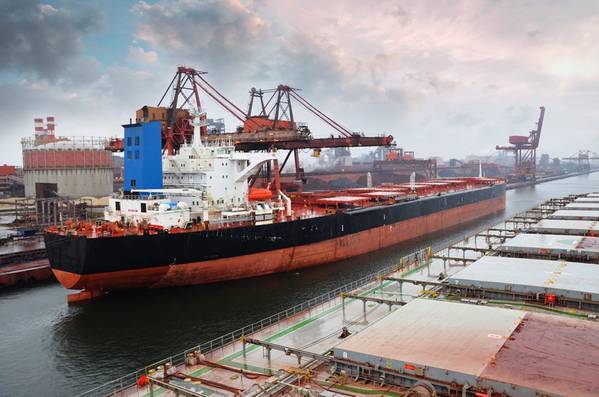
The Baltic Exchange's main sea freight index rose to more than a six-month high on Tuesday, boosted by stronger demand for capesize and panamax vessels.
The Baltic dry index, which tracks rates for ships ferrying dry bulk commodities and reflects rates for capesize, panamax and supramax vessels, rose 81 points, or about 8.3%, to 1,054, its highest since Dec. 24.
The Baltic capesize index jumped 206 points, or about 12.5% to 1,854, its highest since Dec. 24.
Iron ore future in China gained on Tuesday, on robust demand from China's steel mills and concerns over supply.
"The gradual re-opening of all countries and the intensified interest for restocking have given a boost to the dry bulk market," Allied Shipbroking said in a weekly note on Monday.
Average daily earnings for capesizes, which typically transport cargoes of 170,000 tonnes to 180,000 tonnes, including iron ore and coal, increased by $1,489 to $14,786.
The panamax index gained 65 points, or 7.4%, to 949.
Average daily earnings for panamaxes, which usually carry coal or grain cargoes of about 60,000 tonnes to 70,000 tonnes, rose $586 to $8,545.
The supramax index rose 12 points, or 2%, to 624.
(Reporting by Anjishnu Mondal; Editing by Ramakrishnan M.)