Chinese ports and marine safety authorities are on high alert as an expansion of sea ice makes it tougher for ships to berth and discharge at key energy product import terminals along the coast of northern Bohai Bay.
A cold wave sweeping the northern hemisphere has plunged temperatures across China to their lowest in decades, boosting demand for power and fuel to historic highs in the world's largest energy consumer.
"The sea ice situation is more severe this year than the same period in previous years," said Wang Jun, a professor specializing in transport issues at Dalian Maritime University.
"It could impede sailing and docking for vessels, no matter how big they are."
Weather officials warned against severe frost this week in the region, with sea ice stretching 45 to 55 nautical miles at Liaodong Bay and 10 to 20 nautical miles at Bohai Bay, close to levels that could prompt temporary bans on shipping.
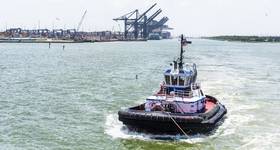
Last weekend, the marine safety bureau in northern Hebei sent several tugboats to the aid of vessels, such as LNG tanker Clean Planet and coal bulk tanker Agia Eirini Force, trapped in sea ice that was 1 meter (3 ft) thick, to help bring them to Caofeidian and Huanghua ports, state television said.
The Agia Eirini Force is seen leaving China on Tuesday but Clean Planet's latest location has not been updated, shipping data on Refinitiv Eikon showed.
Marine authorities and ports in Tianjin, Hebei and Liaoning province are closely monitoring weather conditions and sending drones and ice-breaking tugs to clear the fairway for expected vessels, they said.
"Congestion duration is slightly higher this week," said Rebecca Chia, an LNG analyst at Kpler, with data showing average waiting time for LNG discharge at its the highest since winter began in October.
However, operations at Caofeidian LNG terminal, China's largest re-gas facility, have been normal, a company executive said.
"We're maintaining full-capacity operation, similar to the same time last year," he said on condition of anonymity.
Sea ice ranks among the five major ocean threats considered to endanger fishery, marine transport and offshore oil and gas production.
In 2010, the eastern province of Shandong suffered its worst sea ice conditions in 40 years, which blocked ports and becalmed dozens of vessels.
(Reporting by Muyu Xu in Beijing, Chen Aizhu and Jessica Jaganathan in Singapore; Editing by Florence Tan and Clarence Fernandez)