Transit through the Strait of Hormuz remains controlled rather than open, but throughput is increasing, according to Windward’s latest intelligence report.
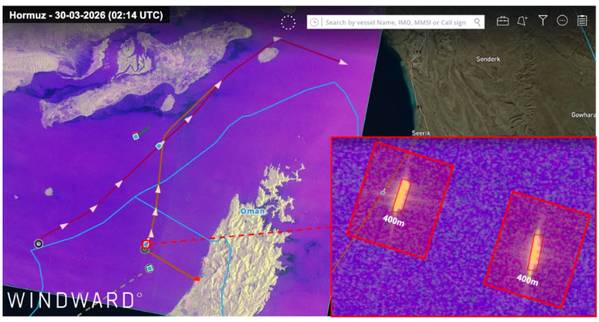
On March 30, six AIS-transmitting vessels crossed the corridor, while additional movements likely occurred under partial or fully dark conditions.
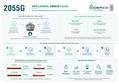
At the same time, vessel activity at the Iranian city of Bandar Abbas provides visibility into how this system operates in practice. A coordinated pattern is emerging: outbound energy exports continue, inbound food supply is prioritized, and China-Iran trade flows remain active, all under AIS-dark conditions.
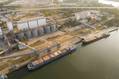
Twenty-four AIS-dark vessels were identified across the oil, bulk, and container terminals, all assessed to be operating under Iran-controlled access through Hormuz. Two tankers, each between 180 and 250 meters, were identified loading dirty petroleum products for export. Total volume is assessed at approximately 700 thousand barrels. Outbound petroleum flows continue under fully dark conditions.
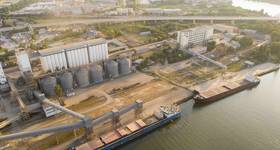
Eight vessels, ranging from 150 to 190 meters, were discharging an estimated 375,000–500,000 tonnes of grain, corn, and agricultural inputs. The cargo is valued at approximately $80–120 million under current freight conditions.
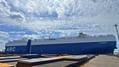
Fourteen container vessels, between 150 and 300 meters, were identified with an estimated 55,000–90,000 TEU in motion, valued at approximately $220–360 million. Smaller feeder vessels appear to be dual-cycling cargo. They discharge Chinese-manufactured goods, machinery, and chemicals inbound, then load Iranian petrochemicals, minerals, and dried goods outbound. Larger vessels are primarily discharging inbound cargo.
Beyond Hormuz, Windward says pressure on global oil flows is intensifying. Iranian exports continue through opaque logistics networks, Russia’s Ust-Luga port remains disrupted following repeated UAV strikes, and a direct strike on a laden VLCC near Dubai signals expanding exposure across Gulf waters.
The operating environment reflects three concurrent dynamics: controlled access through Hormuz, large-scale dark activity, and growing kinetic risk to infrastructure and anchored vessels.