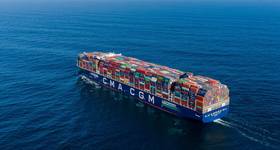
South Korea's Hyundai Merchant Marine (HMM) toped highest on-time performance among 15 global carriers in June.
According to the ‘Global Liner Performance Report – July 2019’, issued by SeaIntelligence, HMM ranked the most reliable carrier in June 2019 with a score of 91.8 percent - improved 8.2 percent points compared to last month.
HMM’s performance was also 8.3 percent points higher than global average of 83.5 percent. This result was calculated on the basis of a range of services, including Trans-Pacific, Asia-Europe, Trans-Atlantic, India, Middle-East and South America etc.
Since 2017, HMM has put its continuous efforts to restore customer trust and enhance its service quality as part of the improvement of customer satisfaction.
HMM official said, “This performance in schedule reliability is a rewarding result of our redoubled efforts to strengthen service quality.” And that “With a pride of Korea’s national flagship carrier, HMM will do its best to maintain top-level of service competitiveness to ensure customer satisfaction and trust.”