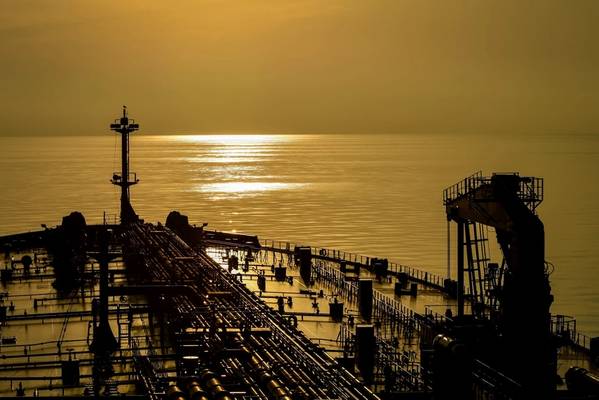
When Ritesh Mehra, 43, enlisted for a four-month stint as captain on a liquid gas tanker last July, he never expected to be stranded at sea until spring.
“Twice it has happened that the ports are not allowing crew change,” Mehra told Reuters via Zoom from the bridge of the 80,000 tonne ship docked outside the Indian port of Haldia.
“My family won’t trust me anymore. I have been giving them dates when I would come home from December.”
Mehra, who has 20 years’ experience at sea, is also trying to buoy the spirits of his nervous crew of 23, many struggling with fatigue and social isolation.
“Being chained to this particular place, you can almost say jail, is bearing on the crew now,” Mehra said. “They are thinking more about it than the actual job at hand.”
An estimated one hundred thousand seafarers are stranded at sea due to the pandemic, the International Chamber of Shipping said last week.
Crew rotations depend on complex logistics, including securing transit visas and arranging chartered flights to repatriate sailors when they disembark at an international port.
In order to maintain effective operations and safety, sailors are only allowed off a ship when a replacement can be brought on board.
Arranging for the right entry permits, and quarantine and testing to take place during the short time when a ship is at port can be daunting because of coronavirus restrictions.
As a result, crew rotations during the pandemic are often cancelled at short notice, while regular shore leave, once a mainstay of life at sea, has also come to a halt.
Near Hong Kong’s busy waterways, visiting ships are often anchored for days as they unload goods to smaller vessels or barges.
Reverend Stephen Miller, who would normally come aboard to give counselling and advice to sailors, is now reduced to delivering bags with supplies, including SIM cards and snacks. He says he is concerned about the sailors’ mental health.
“You can just imagine it for yourself, you have been planning to go home, maybe see a young child for the first time in many months, and then it is taken away from you,” he said.
“That obviously leads to sadness, which can lead to depression. If it is not talked about, it may sadly lead to people thinking that life’s not worth living.”
Mehra finally disembarked this month and has returned to India, his family eagerly waiting to see him. During his time at sea, he had missed the funeral of a close relative and said his time away had taken a toll on his family.
“My younger son is not talking to me very well,” he said. “There will be things I have to take care of. It is not going to be a very joyful homecoming.”
(Reporting By Aleksander Solum; Editing by Karishma Singh)