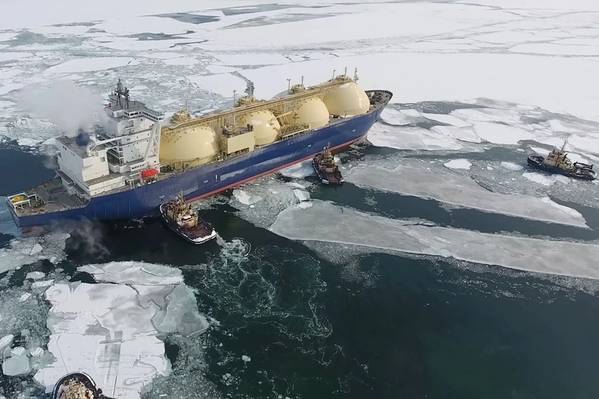
Russia's second new domestically-built ice-class carrier for transporting liquefied natural gas, the Konstantin Posiet, departed from Bolshoy Kamen Bay in Primorsky Krai and set a course along the Northern Sea Route, LSEG data showed.
For Russia, the tanker represents another step in overcoming Western sanctions designed to prevent it from moving gas to international markets and to curb its revenues for waging war on Ukraine.
The vessel was built at the Zvezda shipyard, one of Russia's most advanced shipbuilding facilities, to serve the Arctic LNG 2 plant, which is subject to U.S. sanctions.
According to LSEG data, the tanker Konstantin Posiet is expected to arrive at its destination on August 30. The destination of the gas carrier has not been specified.
Zvezda specialises in building large Arc7 ice-class tankers capable of breaking through ice up to two metres (6.5 ft) thick.
The shipyard was meant to build 15 tankers for Russia's Arctic LNG-2 project, but sanctions have caused delays.
The first Russian-built ice-class tanker for liquefied natural gas from Zvezda shipyard Alexey Kosygin entered service last December.
The latest vessel means it has a total of three ice-class tankers that allow the gas to be shipped via a much shorter route.
(Reuters)