Russia has begun commercial oil exports from Rosneft's Vostok Oil, its vast Arctic development that Moscow is counting on to lift crude production following years of delays and sanctions.
The launch comes as Russia looks for new sources of production growth after the US shale boom helped propel the US past Russia to become the world's largest crude producer.
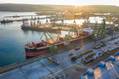
State-controlled Rosneft started loading crude in September onto specialised ice-class tankers at its newly built Bukhta Sever terminal on the Taimyr Peninsula, marking the operational debut of a project once billed as capable of producing up to 2 million barrels per day, or around 2% of global oil supply.
For now the exports remain far below those ambitions. Two industry sources expect exports to average about 150,000 bpd this year, with volumes largely supplied from Rosneft's mature Vankor fields.
"Amid growing volatility, the development of the Vostok Oil project will help stabilise global energy markets", Rosneft said, responding to a Reuters request for comment. The company added that the project is being developed in line with "shareholder-approved development strategy".
"As for the quality of the oil supplied by the company, it fully satisfies our customers", Rosneft said.
As development of the northern greenfield assets, particularly Payakha, advances, Rosneft plans to increase exports to around 600,000 bpd by the second half of 2027, before reaching 1 million bpd by 2030, the company said.
In September, Rosneft loaded about 250,000 metric tons of crude from Bukhta Sever across three tankers: the Panamax Valentin Pikul and Aframax Akademik Gubkin, which delivered oil to Murmansk for ship-to-ship transfer, and the Aframax Vladimir Monomakh, which sailed to Asia via the Northern Sea Route, the two sources said and LSEG data showed. A fourth tanker awaits loading, LSEG data showed. Initial buyers of the unnamed grade were unknown.
RUSSIA BETS ON ARCTIC GROWTH
The launch comes at a challenging time for Russia's oil industry.
The US has strengthened its position as the world's largest crude producer and Russian production has struggled to recover. According to US Energy Information Administration data, Russia's oil and condensate output averaged about 9.9 million bpd in 2025, compared with nearly 13.6 million bpd in the United States.
Vostok Oil represents Russia's primary vehicle for long-term production growth. Spanning 13 fields with an estimated 50 billion barrels of low-sulphur crude, the project connects to Bukhta Sever via a dedicated 790-kilometre (491 miles) pipeline and a planned 100-tank storage hub, according to Rosneft.
Western sanctions imposed after 2022 triggered the exit of key international investors, including Trafigura and Vitol, forcing Rosneft to rely on domestic financing and asset sales and causing lengthy delays.
Despite those setbacks, the project remains strategically vital: beyond tapping vast Arctic reserves, Bukhta Sever provides a secure export outlet insulated from drone strikes targeting Russia's Baltic and Black Sea infrastructure amid Moscow's war in Ukraine.
(Reuters)