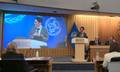
Wärtsilä and two Indonesian partners have today signed a joint development agreement with the intention of creating the first ever bio-LNG plant in Indonesia. The co-signers of the agreement with Wärtsilä are PT Pertamina (Persero), a national energy company, and PT Godang Tua Jaya (GTJ), a waste utilization sector specialist company.
Wärtsilä Oil & Gas Systems (WOGS) will conduct a feasibility study for the project to develop a mini bio-LNG plant with a capacity of 0,75 tons/hour, which corresponds to approximately 4 MW/hour in electrical production. The plant will process municipal solid waste into eco-friendly biogas for use as a renewable energy source for typical vehicle fuel. In addition to the feasibility study, WOGS will provide technological support and an economic assessment. This study represents a Front End Engineering Design (FEED) equivalent. If the project is deemed to be feasible then the parties are expected to enter into an Execution Agreement.
"Renewable energy is an increasingly important global requirement, and we are proud to be involved in this landmark project. Wärtsilä has the experience and technological expertise in this area to turn solid waste into a valuable resource that can benefit the community," says Mr Sanjay Verma, Area Sales Director, Wärtsilä Ship Power.
Wärtsilä has delivered LNG plants with capacities ranging from 20,000 to 85,000 tons per year and has also developed solutions for capacities up to 1 million tons per year. At the other end of the scale are Wärtsilä's mini LNG plants that are particularly suitable for the liquefaction of biogas, and the production of LNG as a vehicle fuel.
An outstanding example of Wärtsilä's expertise in this field is the Wärtsilä biogas liquefaction plant in Oslo, Norway. The plant converts household food waste into biomethane that is then used to fuel the local buses. The plant treats 50,000 tons of garbage per year, which produces enough fuel to run 135 buses. The environmental benefits are extremely significant with annual CO2 emissions being reduced by as much as 10,000 tons. Additionally, nitrogen oxides (NOx), noise levels, and particulate emissions are also considerably reduced.