7 July 2015. A quarter of a century old, with over 900,000 kilometres (488,842 nautical miles) logged and still on the cutting edge of science and technology: 8 July 2015 will mark the Research Vessel Heincke’s 25th “birthday”. Staff from the Alfred Wegener Institute, Helmholtz Centre for Polar and Marine Research (AWI), which operates the Heincke, take part in expeditions with the ship just as often as fellow researchers and students from Germany and abroad.
Back in 1990, when Federal Minister of Research Prof Heinz Riesenhuber dedicated the Heincke to the pursuit of scientific research, he would never have imagined that it would be operating today with a particle filter and downstream aftertreatment system. The Heincke was refitted with new engines last winter, making the already low-vibration ship considerably more environmentally friendly with these features.
“We’re proud that we can now pursue our research efforts on a ship that’s a model of environmental protection,” says Dr Rainer Knust, Scientific Coordinator of the Heincke.
The Heincke – just like her sister ship, the Alkor – was designed as a multi-purpose vessel, equipping her to support nearly any type of marine research. At the beginning of her service life in the early 1990s, the focus was primarily on biological and oceanographic research. But as early as her second year, the ship left for extended expeditions in the Bay of Biscay, where the spotlight was on plankton and the oceanography and development of fish and crab populations. In the years that followed, further expeditions ranged as far as the Canary Islands and into the Mediterranean, often in connection with international projects.
However, her main research area was and is the North Sea. When the Biological Institute Helgoland joined the Alfred Wegener Institute in 1998, the ship’s cruising area was extended to the north; as a result, the Heincke is now increasingly supporting research efforts as far north as Svalbard. “She serves all marine disciplines, from biology and ecology, physical oceanography and ocean chemistry to geology, making her an important research platform not just for the AWI, but also helping other institutions on the coast to successfully pursue their research endeavours,” explains Knust. In cooperation with the Universities of Bremen, Oldenburg, Kiel and Universität Hamburg, the Heincke is also an essential “floating university” for the next generation of scientists.
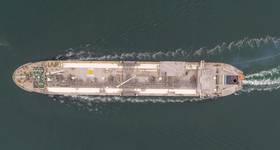
The 54.4-metre-long and 12.5-metre-wide vessel has a range of 4,000 nautical miles and is designed for 30 days of continuous operation at sea. The Heincke offers accommodation for up to twelve scientific staff. The twelve-man crew keeps the ship running smoothly – and the researchers will throw them a small party on board to thank them for their hard work and in honour of the ship’s birthday.
On 9 July the Heincke will then depart for her next expeditions, which will take her to northern Norway and Svalbard.