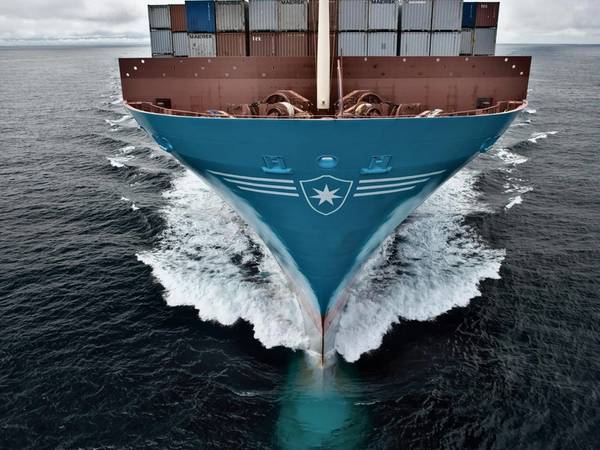
A.P. Moller-Maersk, the world's biggest container shipping group, will add devices to reduce harmful exhaust emissions to some of its ships ahead of new global fuel regulations starting in 2020.
To combat air pollution, the International Maritime Organization (IMO), the United Nations' shipping agency, has set global regulations to cap the sulphur content in marine fuels, known as bunkers, at 0.5 percent down from 3.5 percent now.
Shipowners could meet the new regulations by installing sulphur-stripping exhaust cleaning systems, known as scrubbers, and continue to burn cheaper high-sulphur fuel oil (HSFO). The companies could also comply by burning costlier low-sulphur fuels such as marine gasoil, ultra-low-sulphur fuel oil or liquefied natural gas (LNG).
"As part of the preparations we have decided to invest in new scrubber technology on a limited number of vessels in our fleet of around 750 container vessels," Niels-Henrik Lindegaard, head of Maersk Oil Trading told Reuters in an email.
"Using scrubber technology is a small part of – and just one of several elements in – our overall 2020 fuel sourcing strategy to ensure compliance in time," he said.
A spate of recent scrubber installation orders led energy researchers to revise their demand forecasts for high-sulphur bunker fuel higher as the scrubbers will let the ships continue to burn HSFO.
But, a switch to low-sulphur fuels is still widely seen as the most practical form of compliance given the high investment and operational costs associated with scrubbers and uncertainty around future emissions regulations.
"While we will continue to explore how to best comply with the 2020 sulphur cap, we still believe the best solution remains with compliant fuels from refineries on land," said Lindegaard.
In August, Maersk announced it had reached an agreement with Royal Vopak, an independent tank storage operator, to launch a 0.5 percent sulphur fuel bunkering facility in Rotterdam.
The joint initiative with Vopak will meet about 20 percent of Maersk's global demand for IMO 2020 compliant fuels "and we are looking into more bunkering facilities like this," said Lindegaard.
Maersk Oil Trading purchases marine fuel for its parent company A.P. Moller-Maersk and is among the biggest bunker buyers in the world.
(Reporting by Roslan Khasawneh and Jacob Gronholt-Pedersen; Editing by Christian Schmollinger)