As Americans do each year, with 2026 just the same, we are hopeful for a more promising year, with better outcomes and calmer seas. But for construction of the Nation’s inland waterways lock and dam infrastructure, there is a strong sense of urgency like never before.
Since 1987, just 10 projects to modernize or expand locks on the inland waterways system have been completed, with seven of them started and finished between 1987 and 1997 at an average cost overrun of 33%.
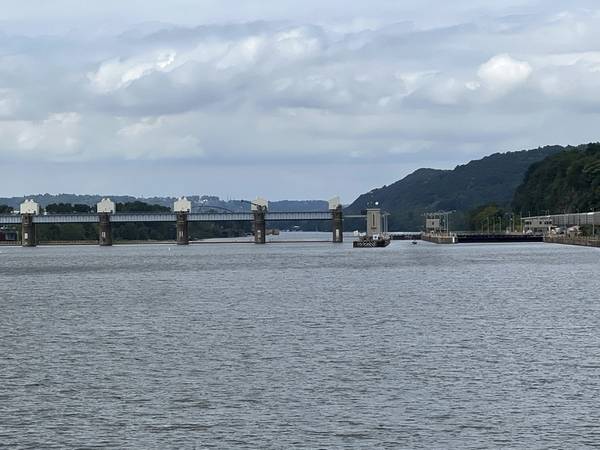
Since 2008, only two lock modernization projects have been completed. One of them, the Olmsted Locks and Dam, opened in 2018 and took 26 years to complete at a cost hike of 275% from its original authorized cost. Olmsted had become the poster child for what could go wrong in Corps of Engineers’ construction and project delivery – until now. Unfortunately, the lessons from Olmsted to avoid repeating another multi-decade construction timeline haven’t been leveraged. Kentucky Lock is now slated to carry an even higher cost overrun, at currently 297% and expected to increase. Its projected finish date is sometime in the 2030s and will mark over 30 years since its construction started. Before 2014, inadequate or uncertain annual funding was to blame for cost overruns and delays for navigation projects, but the infusion of $2.9 billion from the bipartisan infrastructure bill of 2021 has demonstrated that execution challenges extend beyond funding.
The time is now for the Corps to make critical changes to its delivery process for these essential infrastructure projects that help to propel the Nation’s economy forward.
A recent HDR study commissioned by Waterways Council, Inc. (WCI) recommends the Corps treat the inland navigation waterways as a system rather than a series of individual projects and manage it through the Capital Investment Strategy (CIS).
It also recommends the Corps create a centralized program management office for the inland waterways and improve cost estimations and value engineering, to use standard designs for locks and dams where possible, to expand site investigation efforts, to use 3D modeling and conduct constructability reviews; and to centralize competencies and deepen the Corps’ knowledge base.
WCI has called for the revocation of Executive Order (EO) 12322 (EO), issued by President Ronald Reagan in 1981, that mandates federal agencies submit any water and related land resources project proposals to the Office of Management and Budget (OMB) for review before sending them to Congress for approval. This creates an inefficient bureaucratic bottleneck, allowing OMB to interpret projects and limit access to effective solutions such as continuing contracts and alternative delivery methods that provide considerable opportunity to improve execution and reduce risks.
We also call upon Congress to pass the FY26 Energy & Water Development (E&WD) appropriations bill that funds the Corps of Engineers. At press time, things are looking positive with the House releasing text for a three-bill funding package that includes E&WD, immediately upon their return from the holiday recess. The minibus legislation, if passed, will provide nearly $400 million for inland navigation construction- funding critical in keeping ongoing modernization projects on schedule and within budget. Currently, the federal government is operating under a Continuing Resolution (CR) for FY26 funding that lasts through January 30, 2026. If the House and Senate fail to pass the minibus, Congress will need to pass another stop-gap funding measure to extend funding beyond the current January 30 deadline. It also increases the likelihood of another full-year Continuing Resolution. For the inland waterways, if a full-year CR is enacted and direction to fund earmarks in the base appropriations bills is not included, OMB could dictate where funding will go for federal programs, including the Corps’ Civil Works program, which is not ideal for the navigation construction program.
With the start of the new year comes opportunity for change and improvement, and that must begin now for the Nation’s inland waterways. WCI intends to push forward harder than ever for a better future for our Nation’s towboat operators and shippers of agriculture and energy products, steel, aggregate materials, and inputs to manufacturing.