The Global Marine Technology Trends 2030 report released today indicates that:
* Momentum and capability for a significant evolution in ship design and operation is now building – the report presents design scenarios for commercial ships in 2030
* By 2030 the fastest and most radical impacts are likely to be felt in the development of naval ships and systems where maritime autonomous systems are driving the biggest revolution in maritime security in over a century
* Understanding the world’s oceans is more essential than ever to secure the future of our planet
Global Marine Technology Trends 2030, released today, is the culmination of a collaborative project between Lloyd’s Register, QinetiQ and the University of Southampton looking at the future for: commercial shipping – without which world trade would cease; for navies – so vital for security; and the health of the oceans – the vital resource that defines the future wellbeing of the planet.
In asking ‘what’s next’ GMTT 2030 is an aid to business, policy makers and society in trying to understand the future for the maritime industries and the oceans. Assessing 56 technologies and then focusing on 18 specific areas of technology, GMTT 2030 builds on the scenarios work in Global Marine Trends 2030 and Global Marine Fuel Trends 2030 to provide insight into the impact and – critically – the timescales of transformative technology.
LR was the lead partner on the commercial shipping parts of the report and focused on eight technologies that will transform commercial shipping. As LR’s Marine Marketing Director, Luis Benito explains, "The marine world in 2030 will be a connected and digital one, bringing closer integration between people, software and hardware in a way that could transform the way we operate. We know technology is changing our world and there is a great deal of overlap between technologies and how they combine will be important."
The report identifies two groups of technology drivers - those that will transform the ship design and build space – leading to advancement in ship building, propulsion and powering and the development of smart ships; and the technologies that drive safety, commercial and operational performance – advanced materials, big data analytics, communications, sensors and robotics.
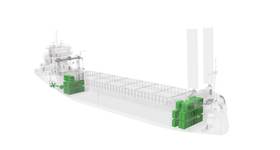
The world of course wants to know what the impact of these drivers will be on different ship types. The report presents ‘Technomax’ scenarios for bulk carriers, tankers, container ships and gas carriers. The Technomax scenarios are not concept ships but give an indication of the potential maximum technology uptake relevant to the four ship market sectors.
Tom Boardley, LR’s Marine Director commented: "Shipping is likely to evolve quickly now. That evolution is likely to be uneven but while 2030 is not far away, we think that shipping is likely to have changed significantly."