
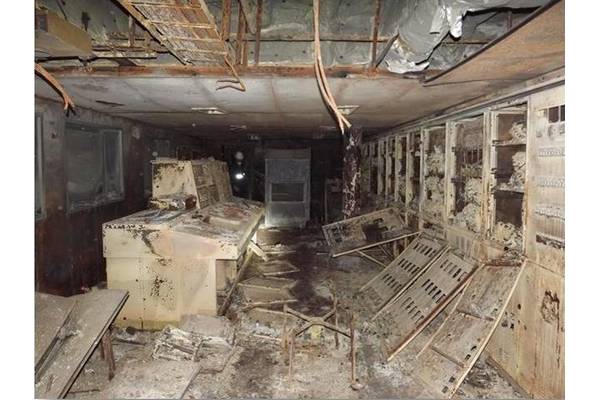
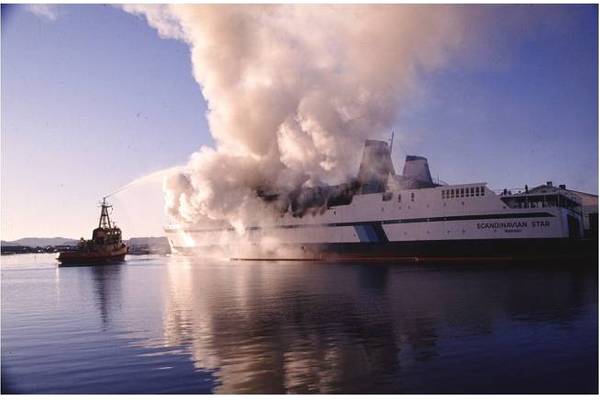
“Lessons are still not being learned when it comes to preventing engine room fires.” This is the message from Graeme Temple, Regional Director for Braemar SA’s Far East operations, following a review of incidents taking place in 2013.
“Last year we attended a significant number of engine-room fires - the industry is still experiencing far too many unnecessary casualties where flammable liquids in engine rooms are finding their way onto hot spots,” he said. ”On many of the vessels I visit, these hot spots are only too easy to find, with thermal imaging photographs readily identifying these defects”.
Yet despite all the attention Class aims at fire prevention and protection design, potential problems must be detected earlier to ensure a fast and efficient first response. A crew has only limited resources available and time to prevent any problem escalating.
At any one time in a modern engine room there can be thousands of liters of flammable liquids circulating inside the pipe systems. Aside from the obvious risk to life, a ship fire is inevitably a very expensive, time consuming, property repair. Heat damage, firefighting effort damage, acid residues from burnt plastics, soot cleaning and painting all add up, leaving a cost which is extremely hard to control for all involved.
According to IACS rules and after 1998, also SOLAS Ch II-2 Reg.15.2.10, all surfaces above 220oc must be insulated or protected in order to prevent ignition of flammable fluids. However, there appears to be a continuing neglect of areas where flammable liquids can escape from high pressure (HP) and LP (low pressure) fuel, HP and LP lubricating, purifier and fuel valve cooling systems.
He explained, “In reality basic maintenance is all that is required. Engine room crew should carry out regular inspection of pipes and associated fittings; they should refit brackets and lagging when carrying out maintenance; leaks should be repaired quickly before a drip becomes a spray; spares for HP fuel pipes should be available, and leakage alarm systems should be tested regularly. Prevention is as straightforward as that.”
braemarsa.com