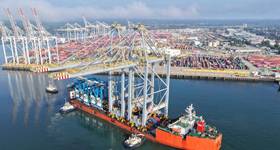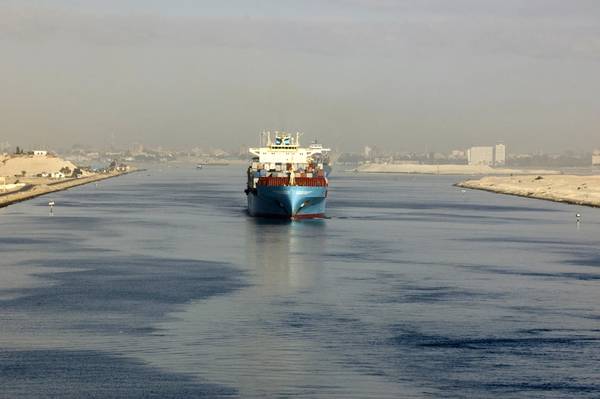
The stranding of a container ship in the Suez Canal has created disruptions in the global shipping industry that could take weeks and possibly months to clear, top container shipping lines said.
Around 30% of the world’s shipping container volume - including goods like sofas, consumer electronics, apparel and shoes - moves through the 193 km (120 miles) Suez Canal daily. Empty containers, which Asian factories need to ship goods, are also caught up in the backlog.
“Even when the canal gets reopened, the ripple effects on global capacity and equipment are significant,” the world’s largest container shipping company Maersk said in a customer advisory on Monday.
Maersk has three vessels stuck in the canal and another 29 waiting to enter, it said, adding that it had so far rerouted 15 vessels to sail south of Africa instead.
“Assessing the current backlog of vessels, it could take six days or more for the complete queue to pass,” it said.
Switzerland’s MSC, the world’s number 2 line, said separately on Saturday the situation was “going to result in one of the biggest disruptions to global trade in recent years”.
“Unfortunately, even when the canal re-opens for the huge backlog of ships waiting at anchorage this will lead to a surge in arrivals at certain ports and we may experience fresh congestion problems,” Caroline Becquart, Senior Vice President with MSC said in a statement.
“We envisage the second quarter of 2021 being more disrupted than the first three months, and perhaps even more challenging than it was at the end of last year.”
Container shipping companies have been struggling for months with disruptions caused by the coronavirus pandemic and a surge in demand for retail goods that led to wider logistical bottlenecks around the world.
The Suez backlog threatens to make it even more difficult for European and U.S. companies to keep products in stock.
The United Kingdom Maritime Trade Operations naval authority said separately that ships diverting around Africa could mean that more traffic passes through high risk areas where pirate gangs operate.
“Whilst the threat of Somalia-based piracy is currently suppressed through a combination of military operations, application of BMP 5 (ship protection measures) and the presence of armed guards, an increase in maritime traffic through the area may present opportunities for Somali pirate groups to attack shipping,” UKMTO said.
(Reporting by Nikolaj Skydsgaard and Jonathan Saul; Editing by Kevin Liffey and Edmund Blair and Kirsten Donovan)