K-Sim Navigation and K-Sim DP, Kongsberg Maritime’s latest generation ship-handling and Dynamic Positioning simulators have been chosen to further advance Tsakos Group’s capabilities at its newly established training center, the Maria Tsakos TCM Academy in Athens, Greece.
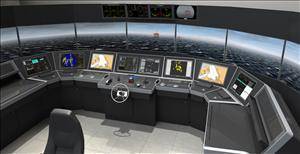
Tsakos’ existing K-Sim Polaris DNV Class A ship handling simulator will be upgraded to K-Sim Navigation in order to meet the latest DNV GL and Nautical Institute compliance requirements. Launched in November 2014, the all-new K-Sim Navigation simulator platform meets the requirements of the most demanding navigation training for merchant, offshore and naval vessels.
The migration from the Polaris system to K-Sim Navigation is enabled via a Long Term System Support Program (LTSSP) established in 2013 as part of a KONGSBERG simulator delivery to Tsakos. The LTSSP facilitates early, easy access to the latest KONGSBERG simulation software and technology. Jointly with the Maria Tsakos TCM training academy team, Kongsberg Maritime will also develop a brand new DP vessel model for use on the new K-Sim DP and K-Sim Navigation simulators.
For Tsakos Group, a shipping company in Greece, and its technical managers, Tsakos Columbia Shipmanagement (TCM) S.A., education and training of crew is of the highest priority. To ensure that all human resources on board and ashore continually advance their training and competencies, Tsakos Group and TCM established the Maria Tsakos TCM Academy in 2014. The academy is a latest generation Maritime Training Center for the training of the group's seafarers and shore staff.
“When you are at sea, mistakes are not allowed. The protection of Human life and the environment are non-negotiable matters. The simulator offers you an unprecedented opportunity to operate and react in a virtual, yet fully realistic- environment where mistakes become lessons learnt. It’s an exceptional educational experience not available on board. It also serves as the best proactive measure to initially educate and ultimately test and evaluate an officers’ competence and readiness to undertake higher rank duties and responsibilities,” says Cpt P. Drosos, Managing Director of TCM.
K-Sim Navigation is based on a new cutting-edge technology platform enabling more realistic training scenarios and enhanced user benefits for both instructors and students. It features an advanced physical engine and state-of-the-art hydrodynamic modelling, allowing vessels, objects and equipment to behave and interact as in real life. To enhance the realism further, a sophisticated new visual system has been developed for K-Sim Navigation, ensuring vessels and objects are portrayed realistically in all possible weather conditions.
“The Tsakos Group's association with Kongsberg Maritime goes back over many years and our officers are very familiar with their equipment and after sale service and assistance. Kongsberg Maritime supplies high quality equipment and provides excellent customer service both ashore and on board. In this respect our selection was the obvious choice,” adds Cpt P. Drosos.