Aerial drones have made major advances in endurance, range and payload capacity over recent years while prices have continually plummeted, leading to a proliferation of drones expected to reach 12 million by 2020.
This trend, some believe, means aerial drones will pose an even greater threat to the safety and security of commercial shipping vessels.
To help combat this emerging threat, U.K. based Martek Marine has developed a maritime drone detection and defeat system called D-FENCE.
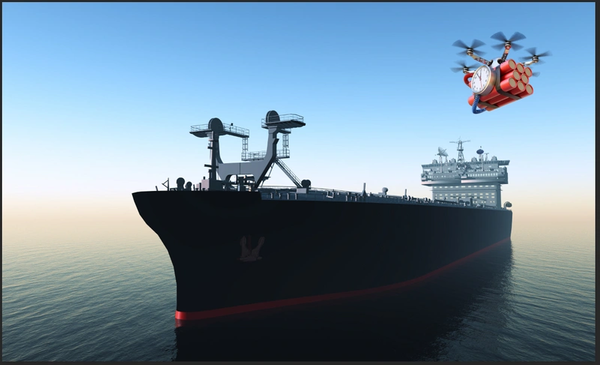
As terrorist use of drones deploying explosives is well documented, Martek Marine says the potential for a drone to deliver an explosive charge through the deck of an oil/gas tanker with potentially catastrophic results is a stark reality. Vessels in port, at anchor or on coastal transits are potential ‘sitting ducks’ powerless to know if/when they’re going to be attacked, let alone be in a position to defend against the threat.
“Drone technology offers some amazing benefits to the maritime industry but as ever, ‘bad actors’ will seek to use the technology for nefarious purposes,” said Martek CEO, Paul Luen. “The development of D-FENCE is a major breakthrough to help mitigate such threats and protect global shipping.”
The ISPS code Part A para 1.3.3 mandates requirements, “preventing the introduction of unauthorized weapons, incendiary devices or explosive to ships” and Ship Security Plans need to address counter measures to protect from such threats. The problem is that, up until now, aerial threats from drones have just not been considered, Martek Marine said.
The company’s D-FENCE system detects and identifies commercial drones within a 20km+ range, providing GPS positioning of both drone and pilot together with the drone’s speed and heading. Configurable and escalating stage alarms in real time allow the threat level to be assessed in good time.
Once a real drone threat has been established, the system enables a 500m+ electronic ‘exclusion zone’ to be created around the vessel. Should the drone approach this exclusion zone, its control/video signal will be interrupted, initiating its fail-safe mode forcing it to land or return to its operator.
Since the system’s recent launch, Martek said it has secured a strong order book and is expanding operations to meet growing worldwide demand. The company adds it is actively seeking new global partners and agents for D-FENCE