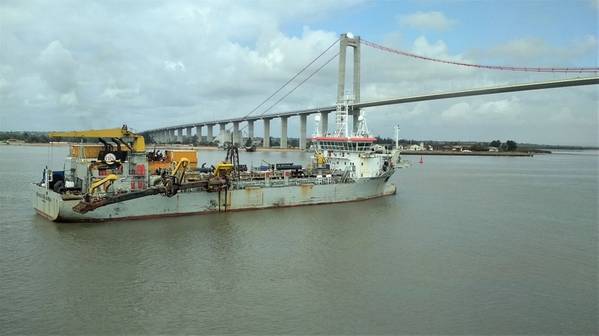
Port of Maputo Deepening Ops Complete

February 19, 2020

Photo: Jan De Nul Group

Jan De Nul Group reports that it has finished the maintenance dredging operations in the Port of Maputo, Mozambique, for the Maputo Port Development Company. This dredging campaign restored the depths created after Jan De Nul Group’s 2016 capital dredging campaign.

Since 2017, the Port of Maputo is open for vessels up to 80,000 tonnes. Jan De Nul Group executed capital dredging works in 2016 to deepen the access channel and port basins from -11mCD to depths varying between -13.05mCD and -14.4mCD. In August 2019, Jan De Nul Group signed the new contract with Maputo Port Development Company for the maintenance dredging operations in the port.

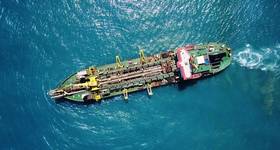
Trailing Suction Hopper Dredger Francesco di Giorgio and Water Injection Dredger Henri Pitot started the dredging works in October 2019. It removed 1.5 million cubic meters of accumulated silt, mud and sand in four months’ time, focusing on the Matola, Katembe, Polana, Xefina and Northern Channels. The drafts of the berths of the Maputo and Matola terminals were also secured.

Logistics News

AIIB to Lend $300m to Expand Philippines Port Connectivity

AIIB to Lend $300m to Expand Philippines Port Connectivity

Survey Finds U.S. Ports Face $6.7 Billion Cargo Equipment Investment Needed

Survey Finds U.S. Ports Face $6.7 Billion Cargo Equipment Investment Needed

Lloyd’s Register Launches LXF Consortium to Standardize Container Stowage Data

Lloyd’s Register Launches LXF Consortium to Standardize Container Stowage Data

Fujairah Terminals Signs Land Lease Agreements to Expand Regional Connectivity, Commercial Opportunities

Fujairah Terminals Signs Land Lease Agreements to Expand Regional Connectivity, Commercial Opportunities

Subscribe for Maritime Logistics Professional E‑News

Stellantis, Dongfeng plan Europe JV; eye EV production in France
China announces plans to buy 200 Boeing Jets and asks for an extension of the US tariff truce
Sources say that the freight rates for Russia's Urals are weakened due to an oversupply of tons.