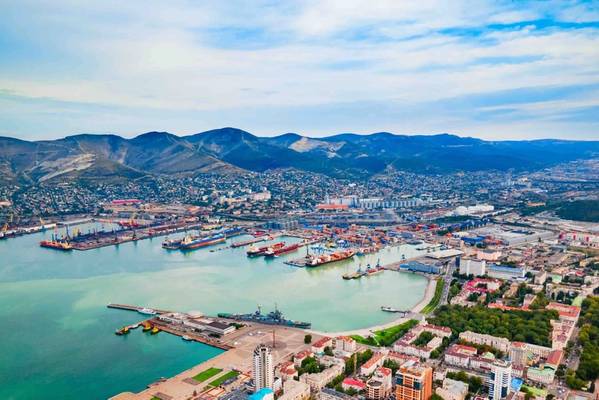
Russia's Black Sea port of Novorossiisk has reached its maximum capacity to export, leaving traders struggling to reroute the crude oil it cannot refine domestically and that increased OPEC+ quotas allow it to produce, three market sources said.
The Organization of the Petroleum Exporting Countries and allies, including Russia, have been unwinding output restrictions.
Adding to that, Russia's refineries carried out a record amount of refinery maintenance in August and September, in part because of damage caused by Ukrainian drones, meaning its capacity to process crude domestically is curtailed and it has more to export.
RECORD EXPORTS AND REFINERY OUTAGES
The refinery outages pushed Russia's exports last month to a record 2.5 million barrels per day.
Of this, exports and the transit of Urals, KEBCO and Siberian Light crude grades through Transneft’s pipeline system to Novorossiisk reached 0.8 million bpd - the highest level in at least five years, according to sources and Reuters estimates.
The preliminary plan for October suggests that crude shipments through Novorossiisk will be at least 0.73 million bpd, the market sources said.
A source at a Russian oil company who spoke on condition of anonymity because he was not authorised to speak publicly said the Transneft system had virtually no spare capacity.
Russia's pipeline monopoly Transneft declined to comment.
The amount of idled refinery capacity in October is expected to be lower than in August, but damage caused by drone attacks may result in upward revisions to export plans.
Russia’s oil infrastructure has faced repeated disruptions in 2025 due to drone and unmanned boat attacks. Baltic and Black Sea ports, Transneft’s trunk pipeline system, and several refineries have been targeted.
Over the coming months, the risk of disruption rises as frequent storms in Novorossiisk often hinder loadings, and delays when passing through the Turkish straits are common.
Since the war in Ukraine began in February 2022, Russia has lost several foreign buyers of pipeline-delivered crude, including Germany, Poland and the Czech Republic, increasing its reliance on seaborne exports.
Apart from Novorossiisk, Russia's other options to export seaborne crude are Primorsk and Ust-Luga in the Baltics and the Pacific port of Kozmino, but diverting from the Black Sea oil hub of Novorossiisk is technically challenging.
(Reuters)