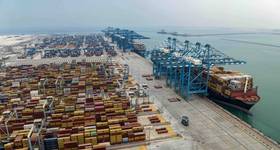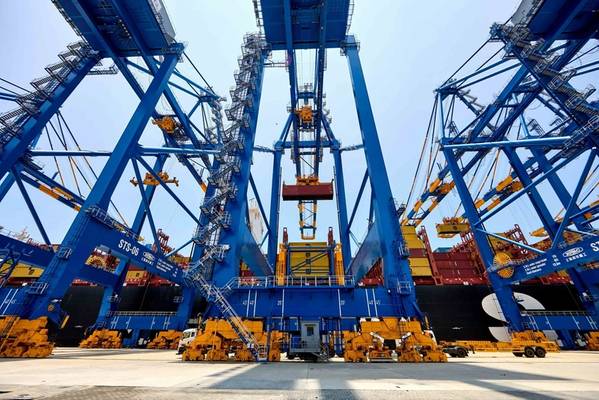
ABB has introduced Waterside Automation solution, which enables quay cranes to perform a larger share of container handling operations automatically. By automating operations over the vessel and reducing the need for continuous manual control, the solution addresses a key bottleneck in container terminal efficiency and enables a gradual transition toward autonomous quay crane operations.
Today, facing ever-increasing pressure on schedule reliability, many container terminals have already automated much of their yard operations. Quay cranes, however, still rely heavily on manual control, which can limit overall productivity. Drawing on their expertise in system integration and artificial intelligence, ABB's Waterside Automation solution increases the level of automation in quay crane operations over the vessel, making the process more consistent and reducing interruptions caused by manual interventions.
A key feature is that the solution enables decoupling of the operator from individual quay cranes. Instead of directly controlling challenging activities like picking up and setting down containers over the vessel, operators will be able to supervise the process and manage multiple cranes from an office environment, allowing terminals to introduce quay crane pooling. This also helps improve workforce flexibility.
ABB’s Waterside Automation solution integrates vision- and movement-based sensor technologies with data analytics and AI to control container position, crane movements, and the vessel environment in real time. Based on this data, the system can automatically execute lifting and positioning tasks, while ensuring safe and consistent crane operations under changing conditions including vessel movements both alongside and across the quay, as well as the impact of weather. It also connects with other handling processes and operator interfaces, helping to coordinate container flows and increase operational efficiency across the terminal.
While similar sensor- and AI-based technologies have been developed and deployed in urban environments, such as semi-autonomous vehicles in public transport systems, ABB has adapted and validated these capabilities specifically for container terminal operations. Crucially, the solution integrates exception handling, stowage confirmation, optical character recognition (OCR), and digitalized work instructions into a coordinated system. This reduces the need for manual verification between steps and supports consistent execution across the full crane cycle.