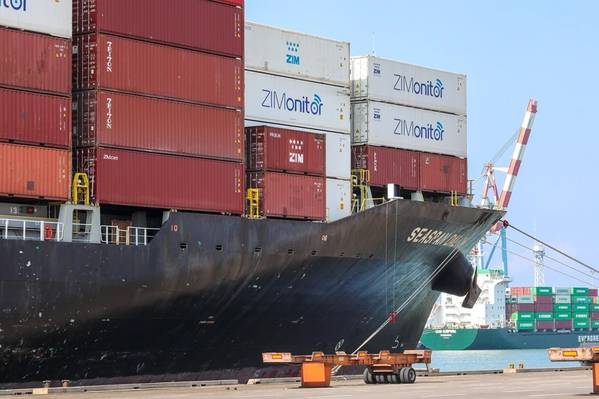
Attacks by Yemen's Iran-backed Houthis on cargo ships in the Red Seas are having limited effect on trade to Israel and have not led to any significant inflationary pressures, Israel's Finance Ministry said in a report on Monday.
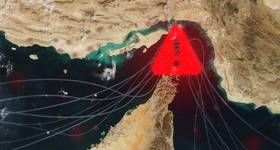
Houthi militants have repeatedly launched drones and missiles against international commercial shipping in the Gulf of Aden since mid-November, saying they are acting in solidarity with Palestinians against Israel's military actions in Gaza.
Their Red Sea attacks have disrupted global shipping, forcing firms to re-route to longer and more expensive journeys around southern Africa, and stoked fears that the Israel-Hamas war could spread to destabilise the wider Middle East.
Israel's Finance Ministry said that with the price of maritime transport up 163% globally, Israel could be affected through higher import costs or by supply chain disruptions and a rise in commodity and energy prices.
But it said the cost of sea transport was just 3% of the total value of imports. And with imports just 20% of private spending, the cost of sea transport was no more than 0.6% on private spending.
The ministry said that, in the most extreme case, the jump in sea freight costs would contribute up to a 1 percentage point increase in the consumer price index (CPI) in the coming year. At the same time, it said there have been no significant disruptions in the supply chain and commodity and energy prices had been largely stable.
As a result, "inflation expectations for the coming year also remained essentially unchanged", the ministry said.
Inflation is at a more than two-year low of 2.6%.
In 2022, imports to Israel were $108 billion. Of that, $73 billion were by sea and 32% of that were via Asia, it noted. Similarly, exports in 2022 were $73 billion and $26 billion were by sea, with 16% to Asia.
The U.S. and Britain began striking Houthi targets in Yemen in January in retaliation for the attacks on Red Sea shipping, but the Houthis have vowed to continue targeting ships linked to Israel, the U.S. and Britain.
The U.S. military confirmed on Saturday that the UK-owned vessel Rubymar had sunk after being struck by an anti-ship ballistic missile fired by Houthi militants on Feb. 18.
(Reuters - Reporting by Steven Scheer; Editing by Alex Richardson)