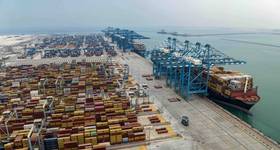
Mining giant Vale and Brazil's top commercial port have signed an agreement to study the potential construction of a facility in Rio de Janeiro state that would produce low-carbon iron ore products, port executives told Reuters.
Vale's deal with the Acu port, Latin America's largest, follows the Brazilian miner's efforts to develop a so-called hot briquette iron (HBI) plant that would make high iron content compact bricks that could supply steel mills in the country looking to manufacture low-carbon steel.
The complex with at least one plant, could attract $1 billion for the construction of an HBI plant, and start operating at the port by 2028 with an annual HBI output capacity of around 2.5 million metric tons, according to Prumo Logistica, the firm that runs Port do Acu.
It added that the facility would likely receive its initial supply of pellets from Vale and may also include an iron ore briquette plant to feed the HBI unit.
HBI is seen as an important intermediate steel product to reduce harmful emissions since it eliminates the need to use dirty coke or coal in steel manufacturing, which accounts for around 8% of global carbon dioxide (CO2) emissions.
"We already have a letter of intent from HBI buyers in Brazil (that) already justifies more than one plant, perhaps two plants in Brazil," said Rogerio Zampronha, the chief executive of Prumo Logistica, in a video interview. He added that another letter of intent will likely to be signed "soon."
The HBI production would likely be powered by natural gas in a project led by Norway's Equinor possibly serving as a key supplier of the fuel, according to Prumo.
In a statement, Vale touted Brazil's low carbon steelmaking potential, adding that it is studying shipping iron ore to the port, without providing further details.
In the past, the company has stressed that its new type of iron ore briquette can help decarbonize steel production while lowering CO2 emissions by about 80% versus traditional manufacturing processes.
(Reuters - Reporting by Marta Nogueira; Writing by Carolina Pulice; Editing by David Alire Garcia and Michael Perry)