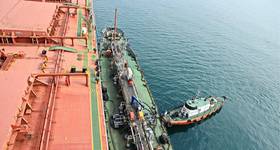
The International Maritime Organization (IMO) officially accepted the proposal to designate waters off the North American coasts as an Emission Control Area (ECA) – a move that will result in cleaner air for millions of Americans. Large ships that operate in ECAs must use dramatically cleaner fuel and technology, leading to major air quality and public health benefits that extend hundreds of miles inland.
The ECA was proposed in March 2009 and the IMO adopted it in the fastest possible timetable.
“This is a change that will benefit millions of people and set in motion new innovations for the shipping industry. We’re gratified by the IMO’s decision to help keep our air clean and our communities healthy,” said EPA Administrator Lisa P. Jackson. “The sulfur, particulate emissions and other harmful pollutants from large ships reach from our ports to communities hundreds of miles inland — bringing with them health, environmental and economic burdens. Cleaning up our shipping lanes will be a boon to communities across North America.”
The large commercial ships that visit the nation’s ports, such as oil tankers, cruise ships and container ships, currently use fuel with very high sulfur content which, when burned, emits harmful levels of particulate matter and nitrogen oxide that can travel hundreds of miles inland, causing severe respiratory symptoms in children and adults. These ships, most flying the flags of other countries, make more than 57,000 calls at more than 100 U.S. ports annually. More than 30 of these ports are in metropolitan areas that fail to meet federal air quality standards. In total, nearly 127 million people currently live in areas that fail to meet U.S. air quality standards.
Enforcing the stringent ECA standards will reduce sulfur content in fuel by 98 percent - slashing particulate matter emissions by 85 percent, and nitrogen oxide (NOx) emissions by 80 percent. To achieve these reductions, tougher sulfur standards will phase in starting in 2012, ultimately reaching no more than 1,000 parts per million by 2015. Also, new ships must use advanced emission control technologies beginning in 2016 which will help reduce NOx emissions.
As a result of the cleaner air, nearly five million people will experience relief from acute respiratory symptoms in 2020 and as many as 14,000 lives will be saved each year.
Canada and France join the U.S. in this North American ECA, implementing a coordinated geographic emissions control program. In developing the U.S. proposal, EPA joined with federal partners at the Departments of Homeland Security, Defense, State, Transportation, and Commerce, among others. This is the first ECA adopted under amendments to an IMO treaty in 2008 that strengthened and expanded both the ECA emissions standards and the approval criteria.