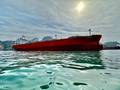
In December, Hydrex demonstrated their ability to mobilize anywhere in the world, carrying out a complex underwater propeller repair on a container vessel at anchorage off Pointe Noire, Republic of Congo.
Following reports of a possible grounding incident, an underwater inspection revealed deformation to all six blades of the vessel’s fixed-pitch propeller. With no immediate access to drydock facilities in the region and schedule commitments to maintain, the company was contacted to assess and resolve the situation on-site.
Hydrex deployed one of their specialized diving team and equipment to Pointe Noire on short notice. As the vessel remained at anchorage, a dedicated workboat was mobilized to provide safe offshore access and enable the repair without delay.
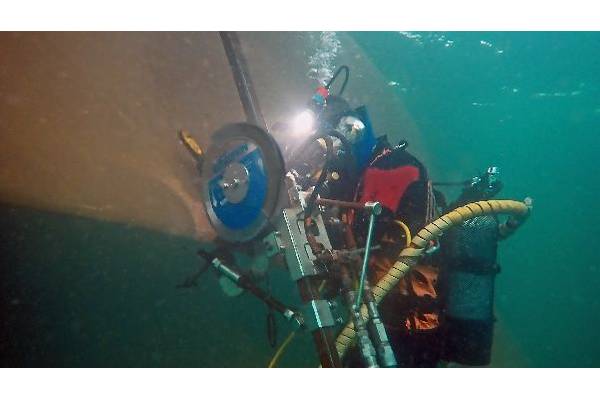
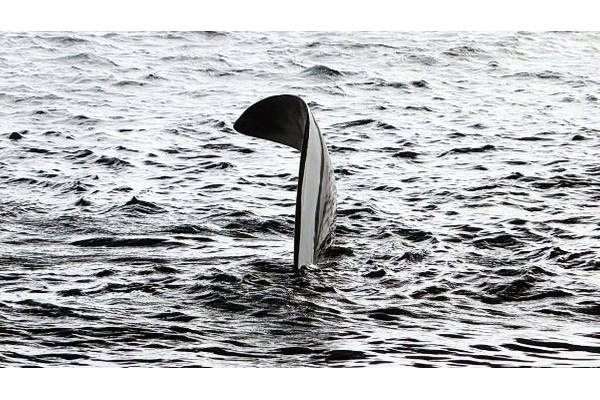
Upon arrival, the divers conducted a detailed underwater inspection, confirming that all six propeller blades were bent towards the aft side. The bends were too severe to permit bending back to shape with the company’s cold straightening equipment and therefore the blades needed to be cropped. Precise measurements were taken on each blade to assess the extent of deformation and determine the most effective corrective action.
Hydrex proposed a repair plan tailored to the ship’s condition and schedule. To restore balance and ensure reliable propulsion, it was agreed that all six blades would be cropped to identical dimensions.
The length of the cuts was approximately 127 cm, and the blades were very thick at this point. The cropping was followed by careful rounding and polishing of all edges. This ensured smooth hydrodynamic performance and reduced the risk of vibration or cavitation, all without requiring drydock facilities.
While on-site, the team also carried out an additional underwater inspection of the rudder at the request of the vessel’s crew. The inspection confirmed that no grounding-related damage was present, providing immediate reassurance that the ship could sail and steer safely. After sailing, the captain contacted the team leader to confirm that all was well and there was no sign of vibration from the propeller.