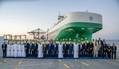
Danish bunker group Monjasa has transferred a ship from West Africa to Panama, where it carried out its first fuel supply off the coast of Balboa.
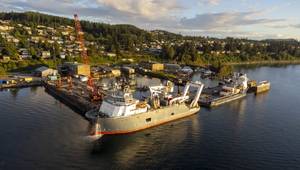
"As part of a fleet reshuffle, Accra arrived in Panama after forming part of Monjasa’s West Africa bunker operation. The tanker fast received all safety and operational approvals from the Panama Maritime Authorities and completed her first fuel supply at Balboa Anchorage on 18 January," said a statement from the marine fuels supplier.
Accra is a 2010-built and 8,800 dwt tanker. Monjasa manages two additional barges in the Panama Canal – one in Balboa and one in Cristóbal – and currently delivers around 40,000 tonnes of bunkers monthly.
"The total fleet of bunker barges in Panama holds an average age of 31 years and 3,100 dwt. So, employing our own quality tanker brings new opportunities for shippers transiting the Canal and further helps us challenge status-quo in the local market,” explains Monjasa Americas Managing Director, Rasmus Jacobsen.
Delivering 450,000 tonnes of marine fuel in the Panama Canal in 2018, Monjasa steps up as the 2nd largest local bunker supplier, the statement pointed out.
Every year, global shippers take around 4.5 million tonnes of bunkers in the increasingly busy Panama Canal.